A Farmer's Statement: Gary Leffler and the 2025 Inauguration
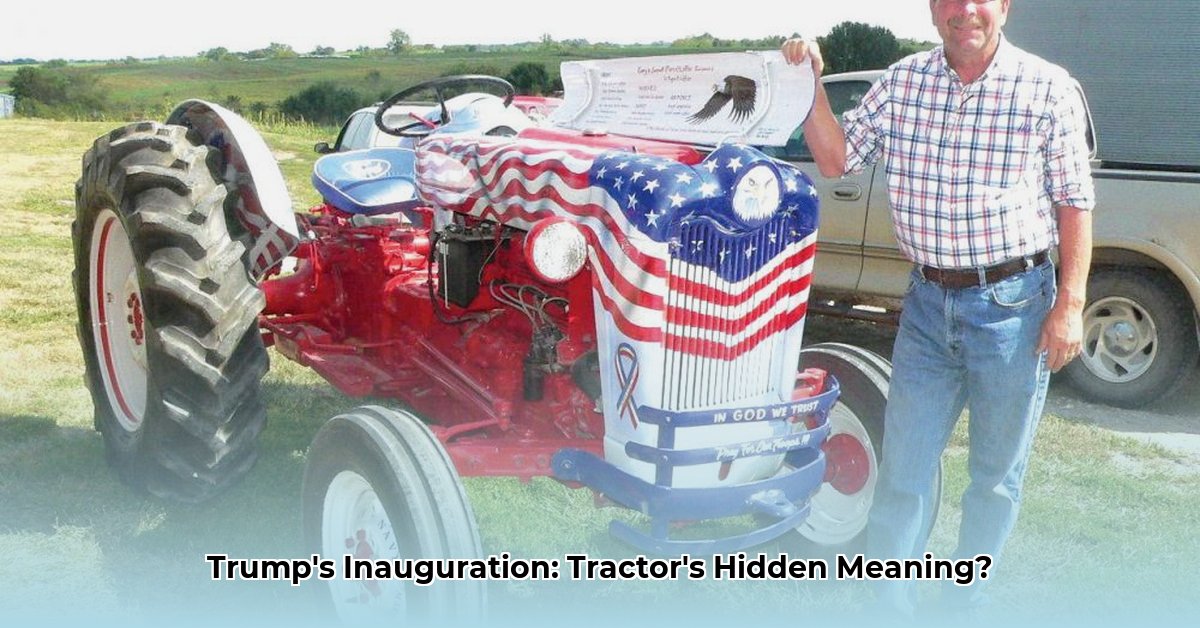
Gary Leffler, a farmer from West Des Moines, Iowa, significantly altered the visual landscape of President Trump's 2025 inauguration. Instead of a traditional parade vehicle, Leffler chose to drive his own tractor—a vibrant red, white, and blue machine adorned with American flags, religious symbols, and military tributes. This unexpected appearance immediately sparked conversation and captured national attention. But what message was he conveying? Was it purely patriotic, or did it carry a deeper political subtext? This article examines the symbolism, the reactions, and the broader implications of Leffler's unique contribution to the event.
The tractor wasn't a spur-of-the-moment decision. Leffler, a veteran of hundreds of parades, meticulously planned the tractor's design and its appearance at the inauguration. The national platform provided an unparalleled opportunity to share his message with a massive audience. The strategic timing and location suggest a calculated effort to leverage the event's visibility. However, determining his specific intentions remains a subject of ongoing discussion.
Leffler's past, unsuccessful attempts to run for office provide valuable context. This suggests that his tractor's appearance wasn't solely a demonstration of patriotism. Rather, it likely reflected his political beliefs and support for the Republican Party. However, the act could also be viewed as a straightforward, powerful expression of his values as a veteran and American citizen. These differing interpretations highlight the diverse ways in which individuals process and understand political messaging.
The tractor's imagery itself was a carefully constructed blend of symbols. The prominent placement of American flags, religious iconography, and military imagery created a powerful visual narrative. This combination deeply resonated with some viewers while sparking curiosity or even opposition from others. This demonstrates how the same symbols can be interpreted in profoundly different ways, depending on individual backgrounds and beliefs. Did the tractor's imagery unify or divide? This question continues to fuel debate and offers a fascinating insight into how political messages are received and interpreted.
The Tractor as a Case Study in Political Communication
Leffler's tractor stands as a unique case study in the power of unconventional political communication. It showcased how ordinary citizens, rather than large organizations, can capture national attention and shape the political narrative. This directly challenges traditional notions of political engagement, suggesting a shift toward more direct and visually-driven forms of expression.
This event also highlights the growing influence of grassroots political movements. It demonstrates that powerful messages don't always originate from substantial funding or established political parties. Instead, they can emerge from individuals with a clear vision and the willingness to express it creatively. The success of Leffler's approach in drawing national attention raises questions about how similar grassroots strategies could be replicated and refined to maximize their impact and reach.
The long-term effects of the patriotic tractor remain uncertain. Will this spark a wider embrace of similar unconventional political expressions? Will this approach influence future political events? The enduring legacy of the tractor's presence at the inauguration—a potent blend of patriotism, faith, military support, and perhaps political affiliation—will likely be subject to ongoing discussion and analysis for many years. It exemplifies the varied forms that political participation can take within a democracy. The image of the tractor traversing Pennsylvania Avenue serves as a lasting symbol of the creative spirit and determination of the American public; this will undoubtedly be a subject of continued research in the field of political science.
Three Pivotal Points:
- The tractor's symbolism transcended the machine itself, representing American values and evoking a narrative.
- The event highlighted the effectiveness of grassroots political engagement through unconventional means.
- The varied interpretations of the tractor's imagery underscore the complexity and subjectivity of political communication.
Utilizing Patriotic Symbolism in Grassroots Campaigns: Lessons from Iowa
The Iowa farmer's tractor provides valuable insights into the strategic use of patriotic symbolism in political campaigns. Its powerful impact raises crucial questions about the potential—and pitfalls—of leveraging national pride in political messaging.
Was the tractor's display a stroke of genius or a risky gamble? The success of such a strategy hinges on understanding how chosen symbols resonate (or fail to resonate) with a target audience. Careful consideration and meticulous planning are absolutely critical.
The symbolic weight of the tractor—representing hard work, rural values, and American ingenuity—is undeniable. The strategy's success, however, depends on factors such as audience understanding, message clarity, and the potential for misinterpretation or offense.
The campaign's utilization of the tractor's symbolism offers a case study in effective grassroots political messaging. Such strategies require in-depth research, audience analysis, and a clear connection between symbol and desired outcome. The potential for misinterpretation or offense must be carefully weighed.